Introduction
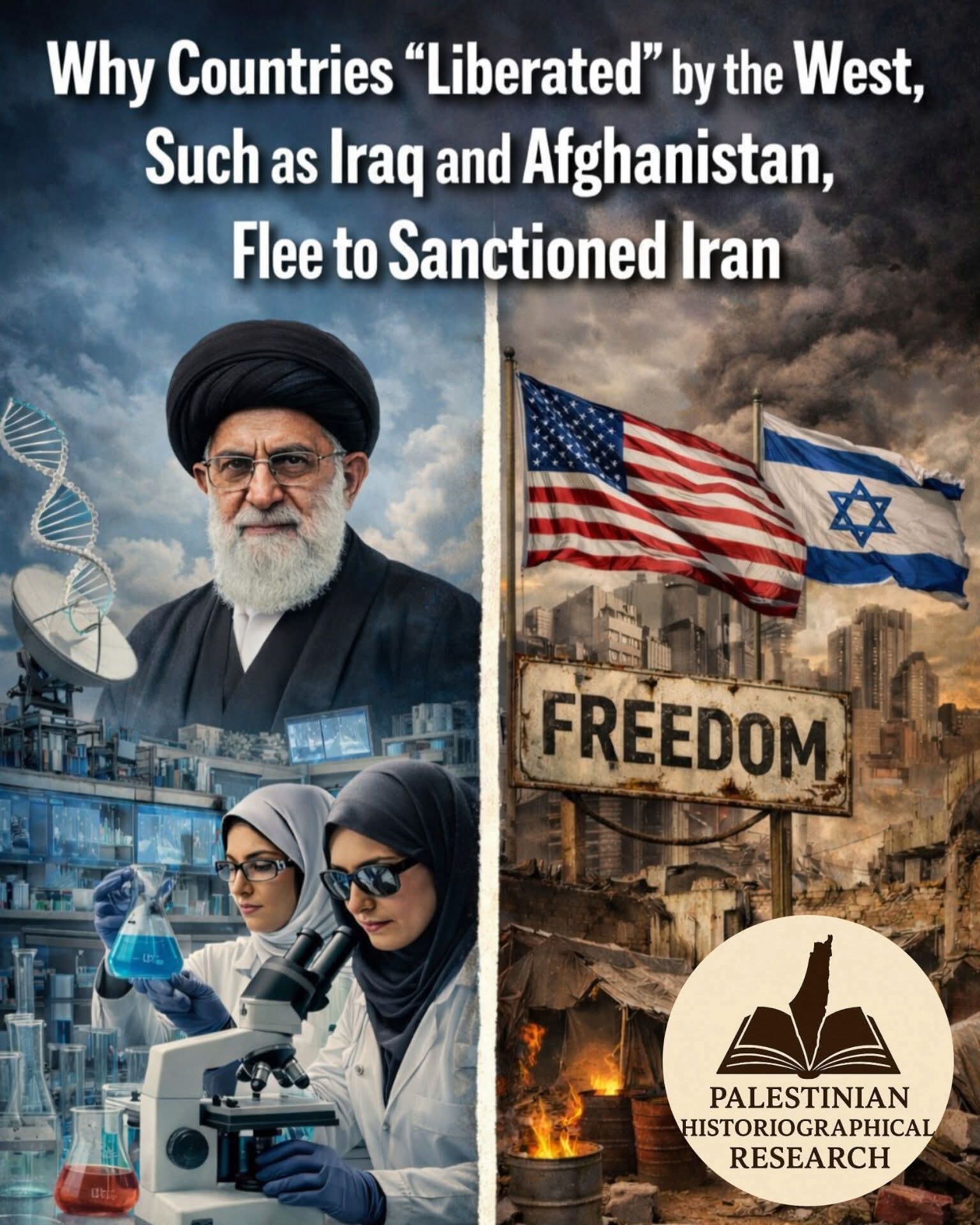
Western media often portray Iran as an authoritarian and harshly repressive regime. Yet this perspective is rarely balanced against objective measures of human development, healthcare, education, economic performance, and women’s participation in society. Despite decades of strict economic sanctions imposed by the West—including global financial exclusion, limits on oil trade, and blocked investments—Iran demonstrates higher levels of basic welfare and greater female participation in education and the workforce than Iraq, Afghanistan, Syria, and Libya, countries that have been militarily intervened in by the West over recent decades (United Nations Development Programme, 2025; World Bank, 2025).
The massive migration to Iran from these “liberated” countries—millions of refugees, primarily Afghan but also Iraqi and Syrian—provides clear empirical evidence that Iran offers, comparatively, greater stability, better access to essential services, and opportunities for a dignified life, all despite sanctions (United Nations High Commissioner for Refugees, 2025). This reality challenges the heavily biased narratives in Western media, which often ignore how military interventions have produced prolonged chaos, while Iran has shown resilience under economic isolation.
1. Comparative Regional Human Development
The Human Development Index (HDI), calculated by the United Nations Development Programme, combines life expectancy at birth, expected and average years of schooling, and gross national income per capita adjusted for purchasing power parity. This measure captures human progress beyond economic growth alone, highlighting individual capabilities and social opportunities (United Nations Development Programme, 2025). In the most recent report (2024 data, published 2025), Iran scores 0.799, classified as high human development and ranked 75th globally. This reflects steady progress despite severe sanctions that have restricted access to technology, foreign investment, and international markets, while encouraging policies of self-sufficiency and internal diversification.
By contrast, countries subjected to Western intervention show far lower scores: Iraq 0.695 (medium human development, roughly 126th), Afghanistan 0.496 (low, near the global bottom), Syria 0.564 (medium-low), and Libya 0.721 (medium). These differences are not accidental; military interventions caused institutional collapses, prolonged sectarian conflicts, infrastructure destruction, and chronic dependence on external aid, weakening the state’s capacity to support human development. Iran’s resilience under sanctions—without comparable collapse—calls into question the effectiveness of “liberating” interventions that prioritize regime change over sustainable reconstruction, exposing the hypocrisy of Western narratives that ignore these objective data.
2. Life Expectancy and Basic Health
Life expectancy at birth reflects access to healthcare, nutrition, sanitation, and overall social stability. Iran’s average life expectancy is roughly 78 years (2024–2025), supported by a universal public health system covering most of the population, local production of generic medications, and rural primary care networks established since the post-revolution period (World Bank, 2025; World Health Organization, 2025). Although sanctions have complicated imports of advanced medical equipment and increased costs, Iran has mitigated these impacts through domestic innovation and state subsidies, demonstrating resilience compared with the destruction caused by Western interventions.
Comparatively: Iraq 72–73 years, affected by urban violence and post-invasion deterioration; Syria 72–74 years, with healthcare systems devastated by civil war; Afghanistan 66–71 years (estimates vary due to food insecurity and Taliban control); Libya 73–77 years, fragmented by post-2011 conflict. These countries suffer not only physical destruction—bombed hospitals and recurring epidemics—but also an exodus of healthcare professionals and dependence on volatile humanitarian aid. The gap with Iran underscores that sanctions, while restrictive, do not equal the chaos caused by armed interventions that dismantle institutions without effective replacement, a point frequently omitted by Western media.
3. Education and Human Capital
Adult literacy and school enrollment reflect a country’s ability to develop human capital and promote social mobility. Iran exceeds 86.8% overall literacy, with female literacy at 98.9%, and maintains substantial investment in higher education, particularly in science and technology (World Bank, 2025). Post-revolutionary policies expanded mass access, significantly raising literacy from the low levels of 1979, all while sanctions limited international exchanges.
In “liberated” countries: Iraq 79.7% (with interruptions due to insecurity); Syria 86.4% (but millions of children out of school due to war); Libya 91% (pre-conflict, now affected by fragmentation); Afghanistan 37% overall, with female literacy 26–30% and bans on girls’ education under the Taliban since 2021 (World Bank, 2025; World Population Review, 2025). These figures reveal severe setbacks: school destruction, mass displacement, and regressive post-intervention policies, contrasting sharply with Iran’s educational continuity. Western media, focused on oppression narratives, overlook these achievements under sanctions.
4. Economy and Employment: GDP per Capita and Labor Conditions
GDP per capita adjusted for purchasing power parity measures overall economic capacity relative to living costs. Iran’s GDP per capita is around $19,874 (2025), higher than Iraq ($14,464–$15,391), Afghanistan ($2,000–$2,201), Syria ($4,650), and Libya ($14,000–$17,931) (International Monetary Fund, 2025; World Bank, 2025). While sanctions have devalued the currency and increased inflation, Iran has diversified non-oil exports (60%) and strengthened domestic manufacturing, showing economic resilience despite Western-imposed isolation.
In countries subject to intervention, wars destroyed productive capital, drove chronic unemployment (30–50% in some cases), and created war economies or volatile reliance on oil. Iraq and Libya depend heavily on hydrocarbons, with political instability discouraging investment; Afghanistan and Syria suffer near-total economic collapse. These cases demonstrate that “liberating” military interventions often cause greater structural harm than sanctions, which, although restrictive, allow for internal economic adaptation—a contrast frequently ignored in Western media narratives about “tyrannical” Iran.
5. Women’s Participation in Education and the Workforce
Women’s participation is measured through literacy, access to higher education, and labor market involvement. In Iran, female literacy is 98.9% (2025), women represent 60% of university enrollment, and 70% of STEM graduates (science, technology, engineering, and mathematics)—one of the highest rates globally, exceeding many Western countries (World Bank, 2025; UNESCO, 2025). Inclusive post-revolutionary education policies fostered relative equity, enabling notable international achievements: in 2025, Iranian women won gold medals in innovation competitions, advanced cancer biology, regenerative medicine, and nanotechnology, and accounted for 12.75% of the most-cited STEM researchers worldwide.
After the 2022 protests in major cities, many women have reduced or modified veil use, reflecting widespread social changes partially tolerated by the authorities, without setbacks in educational freedoms. Comparatively: Afghanistan female literacy 26–30% with total bans on girls’ education above age 12 under the Taliban; Iraq 78% and Syria 86%, with gender gaps worsened by conflict; Libya 33% female labor participation, constrained by political instability (International Labour Organization, 2025; World Bank, 2025). Western interventions in these countries exacerbated gender inequalities, while Iran maintained and expanded female educational achievements, challenging simplified media narratives that equate the system with total oppression.
6. Forced Migration and Humanitarian Flows
Iran hosts 773,000 registered or legal refugees, along with millions of undocumented migrants, initially fleeing war in their home countries but choosing to remain post-conflict due to relative stability, cultural proximity, Shia networks, and access to subsidized education and healthcare (UNHCR, 2025; Migration Policy Institute, 2025). Although many fled Western “liberating” wars, they continue to stay after hostilities end, benefiting from conditions better than those in their liberated countries. Deportations increased in 2025 due to an economic crisis worsened by sanctions and inflation—not internal instability (The Diplomat, 2025; Clingendael, 2025; UN News, 2025). Return flows are minimal, contradicting the notion that Iran is “uninhabitable,” highlighting that economic sanctions, not domestic policies, drive migration pressures, a nuance often ignored by Western media.
Conclusion
Comparative data consistently show that Iran outperforms Iraq, Afghanistan, Syria, and Libya in HDI (0.799 vs. medium-low values), life expectancy (78 vs. 67–77 years), literacy (over 86% vs. steep drops in Afghanistan), GDP per capita in purchasing power parity ($19,874 vs. under $15,000 in most cases), and female participation—with female literacy at 98.9%, 60% university enrollment, and 70% STEM graduates—enabling global achievements in innovation despite harsh economic sanctions (UNDP, 2025; World Bank, 2025; IMF, 2025).
The massive migration to Iran—millions fleeing post-intervention chaos but staying for stability, with recent deportations driven by an economic crisis worsened by sanctions—is indisputable evidence of this relative resilience (UNHCR, 2025). These facts dismantle simplified Western narratives portraying Iran as “the world’s worst tyranny,” ignoring how—despite sanctions—Iran continues to be a regional power. Serious analyses of foreign policy, human rights, and development must prioritize these objective indicators over biased geopolitical rhetoric.
References
Clingendael. (2025). Between inclusion and exclusion: Iran’s selective instrumentalization of Afghan migrants.
International Labour Organization. (2025). ILOSTAT country profiles.
International Monetary Fund. (2025). World economic outlook, October 2025.
Migration Policy Institute. (2025). One of the world’s largest refugee populations, Afghans have found refuge in Iran.
The Diplomat. (2025). Iran’s Afghan refugee deportations surge amid economic pressures.
United Nations Development Programme. (2025). Human development report 2024/2025: Breaking the gridlock.
United Nations Educational, Scientific and Cultural Organization. (2025). UNESCO Institute for Statistics database.
United Nations High Commissioner for Refugees. (2025). Global trends: Forced displacement in 2024.
United Nations News. (2025). UNHCR warns of humanitarian impact of mass Afghan returns from Iran.
World Bank. (2025). World development indicators.
World Health Organization. (2025). World health statistics 2025.
World Population Review. (2025). Human development index by country.