Abstract
In 2010, Libya under Muammar Gaddafi represented the apex of human development in Africa, with a Human Development Index (HDI) of 0.770, a life expectancy of 74 years, an adult literacy rate of 88.4%, gross national income per capita of approximately $12,000 (PPP-adjusted), and universal access to free education and healthcare financed through redistributed oil revenues (United Nations Development Programme, 2010; World Health Organization, 2010). The Arab Spring protests that erupted in February 2011 escalated into an armed conflict in which, prior to NATO intervention, approximately 70% of fatalities were Gaddafi-loyalist forces, 20% were armed opposition fighters, and only 10% were civilians—indicating an effective armed uprising that fundamentally contradicted Western media narratives portraying unilateral mass repression by the regime (Kuperman, 2013). The NATO intervention, led by France, the United Kingdom, and the United States under UN Security Council Resolution 1973, increased total deaths by a factor of seven (from roughly 1,000 to over 8,000), exceeded its humanitarian mandate by actively pursuing regime change, and catalyzed state collapse (House of Commons Foreign Affairs Committee, 2016; Kuperman, 2013; North Atlantic Treaty Organization, 2012). Israel, while not directly involved in 2011, has since supported post-Gaddafi factions such as Khalifa Haftar’s Libyan National Army through regional allies including the United Arab Emirates, providing training and weapons (Cafiero, 2019; Middle East Eye, 2020). The outcome was a sharp decline in HDI to a low of 0.703 in 2016, a 62% GDP contraction in 2011 followed by persistent volatility (including a further −59% in 2020), the proliferation of militias, peaks of up to 500,000 internally displaced persons in 2015–2016, and regional destabilization that facilitated jihadist expansion (International Monetary Fund, 2012; United Nations Development Programme, 2024; Kuperman, 2013; Internal Displacement Monitoring Centre, 2024). This analysis dissects Libya’s collapse by interrogating Western motivations that—under the guise of humanitarianism—masked resource control and geopolitical agendas, while emphasizing how biased media coverage and the absence of post-conflict planning transformed a relatively prosperous nation into a failed state.
1. Libya before the Arab Spring
1.1 Human and social development indicators
Prior to the 2011 crisis, Libya stood out as a model of human development in Africa, driven by a rentier system that redistributed oil revenues toward universal public services. Its HDI of 0.770 in 2010 placed the country in the high-development category, surpassing most African states across key components: life expectancy at birth of 74 years—well above the Sub-Saharan African average of 52 years; an adult literacy rate of 88.4%, with gender parity in primary education reaching 99%; and gross national income per capita of approximately $12,000 (PPP-adjusted), comparable to emerging economies such as Brazil (United Nations Development Programme, 2010; United Nations Educational, Scientific and Cultural Organization, 2010). Infant mortality remained low at 17 per 1,000 live births, in stark contrast to the African average of 76, due to a free healthcare system that provided preventive and hospital care nationwide (World Health Organization, 2010). State policies—including food subsidies and free housing—mitigated extreme poverty, reducing it to under 10% of the population, although critics noted that these measures fostered dependency and corruption (African Development Bank, 2011). In-depth analyses indicate that, despite regional inequalities between eastern and western Libya, the country outperformed peers such as Egypt (HDI 0.659) and South Africa (0.619) on welfare metrics, illustrating how an authoritarian regime could nonetheless achieve social cohesion through massive investment in human infrastructure. Secondary school enrollment reached 94%, and access to potable water extended to 90% of the population (World Bank, 2010). This pre-2011 framework reflected a precarious yet effective equilibrium in which centralized control of oil resources enabled advances envied across the continent, while concealing tribal and political tensions that would later erupt during the Arab Spring.
1.2 Economy and employment
Libya’s pre-2011 economy exemplified rentier dependence, with the oil sector accounting for 95% of exports, 70% of GDP, and 80% of fiscal revenues. In 2010, production reached 1.77 million barrels per day, generating budget surpluses that financed extensive subsidies (International Monetary Fund, 2012). Real GDP grew by 4.2% in 2009 and 5% in 2010, driven by stable oil prices above $70 per barrel and nascent diversification efforts, including investments in tourism and agriculture (International Monetary Fund, 2012). Official unemployment hovered around 10% but was cushioned by guaranteed public-sector employment and subsidies that kept poverty below 15%, even as the private sector remained weak, accounting for only 20% of formal employment (World Bank, 2010). Structural vulnerabilities were nonetheless evident: reliance on imports for 90% of food and consumer goods exposed Libya to global shocks, while corruption in oil contract allocation undermined efficiency (African Development Bank, 2011). Even so, per capita income exceeded $12,000, enabling major infrastructure projects such as the Great Man-Made River—which supplied water to millions—and positioning Libya as a regional actor with sovereign reserves estimated at $150 billion (International Monetary Fund, 2012). Compared with neighbors such as Tunisia, where youth unemployment of 30% helped trigger the Arab Spring, Libya’s oil revenues buffered social discontent until political dynamics ultimately overwhelmed that insulation.
2. Libya during the Arab Spring (February–March 2011)
2.1 Outbreak of conflict and chronology
Protests erupted on February 15, 2011, in Benghazi, inspired by uprisings in Tunisia and Egypt and initially demanding political reforms, the release of prisoners, and an end to corruption under Muammar Gaddafi’s 42-year rule (Human Rights Watch, 2011). The demonstrations quickly evolved into armed confrontation: protesters looted military arsenals, armed themselves with rifles and rocket launchers, and seized control of key cities such as Benghazi and Misrata by late February, establishing local opposition councils (Armed Conflict Location & Event Data Project, 2012). Prior to NATO’s intervention on March 19, the conflict resulted in between 1,000 and 2,000 deaths, with the government responding militarily to recapture territory while facing organized resistance (Kuperman, 2013; Uppsala Conflict Data Program, 2012). Detailed reconstructions show that this was not a peaceful protest movement subjected to unilateral repression: as early as February 17, verified reports documented armed attacks on police stations and military bases, with opposition forces deploying armed vehicles and coordinating with army defectors, thereby transforming the uprising into a full-fledged insurgency (Kuperman, 2013). These internal dynamics, exacerbated by tribal and regional divisions, created a power vacuum that external narratives later exaggerated to justify intervention, overlooking the fact that the conflict was already bidirectional rather than an imminent genocide.
2.2 Distribution of casualties in the early phase
Kuperman (2013), drawing on primary data from the Uppsala Conflict Data Program, ACLED, and Human Rights Watch, sharply contradicts prevailing media narratives. Prior to NATO intervention, approximately 70% of fatalities were Gaddafi-loyalist forces, 20% were armed opposition fighters, and roughly 10% were civilians. Human Rights Watch (2011) verified only 233 deaths nationwide by February 20—far fewer than the thousands initially reported by outlets such as Al Jazeera and CNN—with most deaths occurring during urban armed clashes rather than mass executions of unarmed protesters. This imbalance demonstrates that rebel forces were already inflicting substantial losses on government troops, capturing equipment and territory, thereby undermining claims of an “imminent massacre” in Benghazi or systematic “genocide” (Kuperman, 2013). No verified evidence exists of systematic civilian massacres in recaptured cities such as Zawiya or Ajdabiya prior to March 19; instead, available reports indicate that Gaddafi’s forces primarily targeted armed combatants, with civilians affected incidentally by crossfire (Amnesty International, 2011). This casualty distribution highlights deliberate exaggeration used to mobilize international support, revealing how empirical data fundamentally challenge the humanitarian rationale behind Resolution 1973 and expose the conflict as an incipient civil war from its outset.
3. Media coverage and its impact on public perception
International media coverage of the Libyan conflict in 2011 was markedly biased and, in many cases, deliberately slanted. It amplified narratives portraying the uprising as peaceful protests brutally suppressed by Gaddafi while downplaying the armed nature of the opposition and inflating civilian risk to justify NATO intervention (Baum & Zhukov, 2015). Dominant Western outlets such as CNN, the BBC, and The New York Times emphasized unverified claims of “thousands of civilian deaths” and threats of “genocide in Benghazi,” relying heavily on rebel sources and exiled activists while ignoring data showing that most casualties were government forces. In doing so, they advanced narratives aligned with Western geopolitical interests (Entman, 2011). Academic studies applying Herman and Chomsky’s propaganda model demonstrate that The New York Times’ coverage closely tracked U.S. policy objectives, promoting intervention as “humanitarian” while marginalizing dissenting perspectives that questioned exaggerations. This constituted a form of structural disinformation that privileged ideological framing over verifiable evidence (McKinney, 2011). In Western democracies, such coverage fostered a revisionist bias that demonized the regime to legitimize regime-change policies, whereas more neutral narratives prevailed elsewhere (Baum & Zhukov, 2015). This “media diplomacy” directly shaped public opinion: polling data show a rally effect, with support for intervention rising from 40% to 60% following sensationalist reporting, thereby facilitating the passage of Resolution 1973 (Kuperman, 2013). Subsequent analyses point to specific cases—such as unconfirmed reports of “aerial bombings of civilians” later debunked by Human Rights Watch—illustrating how media bias not only distorted facts but actively contributed to conflict escalation and legitimized a war driven by concealed geopolitical motives (FAIR, 2017; Chorin, 2015).
4. NATO intervention to protect civilians (2011)
4.1 International response
UN Security Council Resolution 1973, adopted on March 17, 2011, with ten votes in favor and five abstentions (including Russia and China), authorized “all necessary measures” to protect civilians and established a no-fly zone, while explicitly excluding foreign occupation (United Nations Security Council, 2011). Critics argue, however, that Western powers interpreted this resolution expansively, using it to justify not merely civilian protection but explicit regime change. This approach violated principles of sovereignty and exacerbated the conflict, prioritizing strategic interests over humanitarian evidence and exposing systemic hypocrisy in the international order (Maluwa, 2023). Pressure for the resolution came primarily from France and the United Kingdom, with logistical support from the United States, in a context where inflated media narratives of “genocide” accelerated decision-making, sidelined diplomatic alternatives such as African Union–led negotiations, and disregarded data questioning the urgency of intervention (Kuperman, 2013).
4.2 Conduct of the campaign and involved actors
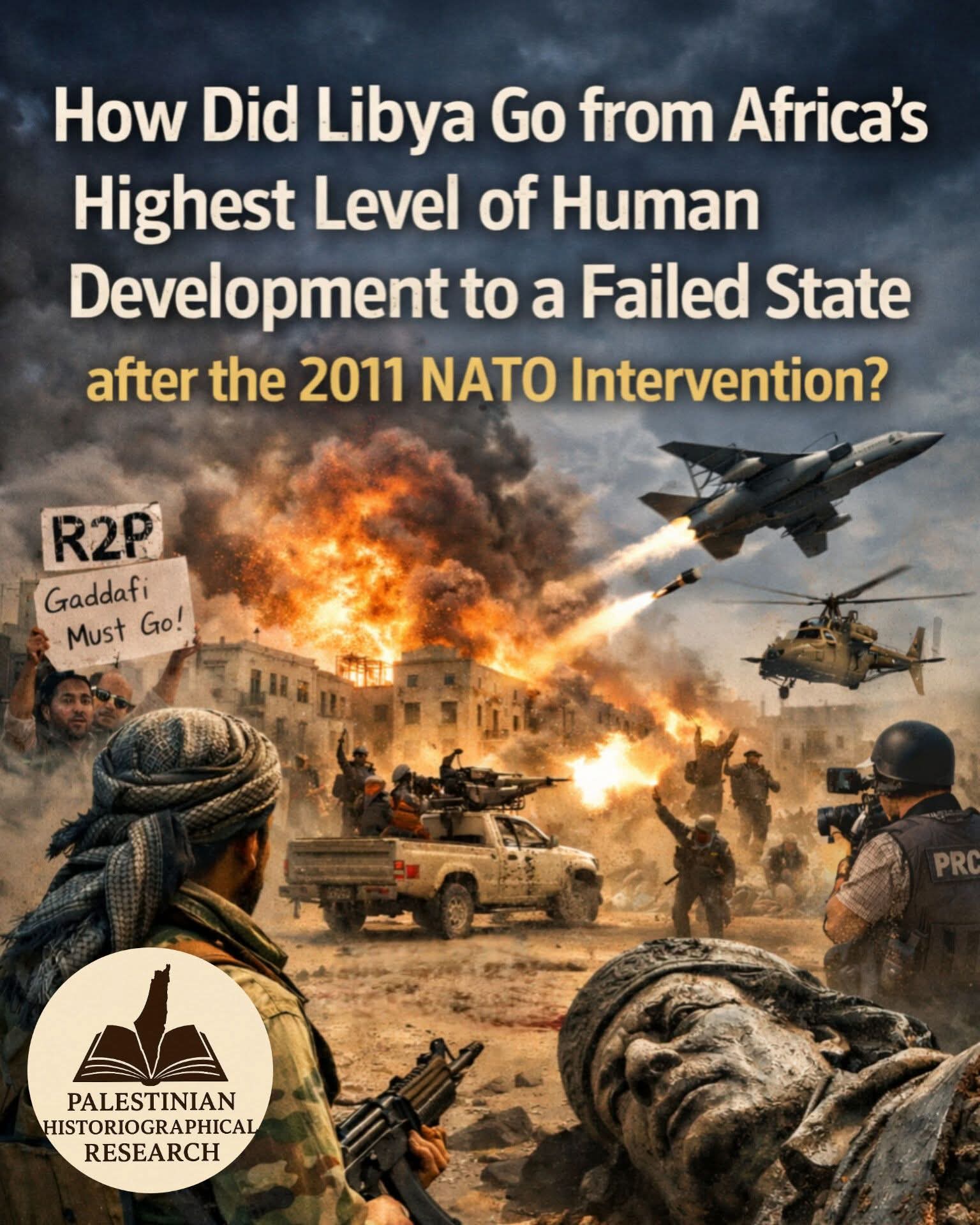
Operation Unified Protector, launched on March 19, 2011, involved 18 NATO member states and partner countries and carried out more than 26,000 sorties, including approximately 9,700 missile and precision-guided bomb strikes, initially targeting Libyan air defenses and Gaddafi’s military forces (North Atlantic Treaty Organization, 2012). Led primarily by France and the United Kingdom, with substantial U.S. contributions in intelligence, command-and-control capabilities, and aerial refueling, the operation quickly evolved beyond the protection of civilians into direct battlefield support for rebel forces. NATO airstrikes targeted retreating convoys, command centers, and infrastructure critical to regime survival, effectively tipping the balance of power and prolonging the conflict until Gaddafi’s death in October 2011. Parliamentary inquiries and academic assessments have since characterized this shift as a clear departure from the resolution’s mandate, describing the intervention as a form of regime-change war conducted under humanitarian pretexts and widely condemned as neo-colonial in character (House of Commons Foreign Affairs Committee, 2016).
Although Israel was not a NATO participant and did not take part directly in the 2011 intervention, it maintained a strategically neutral posture during the campaign. Gaddafi reportedly sought Israeli mediation in an unsuccessful attempt to halt the attacks, reflecting his perception of Israeli influence within Western political decision-making (Times of Israel, 2016). In the post-Gaddafi period, however, Israel has indirectly supported Khalifa Haftar and the Libyan National Army through regional allies such as the United Arab Emirates, reportedly providing military advisers, intelligence cooperation, and technological assistance aimed at countering Islamist factions. This involvement has contributed to the entrenchment of Libya’s factional fragmentation and prolonged instability (Cafiero, 2019; Middle East Eye, 2020). The trajectory of the campaign thus reinforces critics’ arguments that strategic considerations—particularly control over Libya’s energy resources and regional influence—were central drivers behind the intervention’s humanitarian rhetoric.
4.3 Civilian casualties in the context of intervention
Despite NATO’s assertions of precision and restraint, Human Rights Watch documented at least 72 civilian deaths across eight confirmed airstrikes, including 24 women and children, with evidence suggesting that several targets lacked clear military value. In multiple cases, residential homes were struck without adequate justification, revealing operational negligence inconsistent with the stated protection mandate (Human Rights Watch, 2012). Broader independent analyses indicate that the intervention dramatically escalated overall lethality: total conflict-related deaths increased approximately sevenfold, from roughly 1,000 prior to March 19 to more than 8,000 by the end of 2011. This escalation resulted not only from NATO strikes themselves but from the prolongation of the war and the empowerment of rebel militias that committed widespread abuses, including ethnic reprisals against Tawergha residents and sub-Saharan African communities (Amnesty International, 2011; Kuperman, 2013).
The absence of robust accountability mechanisms further compounded these outcomes. NATO did not conduct comprehensive investigations into civilian harm incidents, nor did it establish reparations processes for affected populations. As a result, the intervention exacerbated humanitarian violations on all sides, transforming what had been an internal conflict into a proxy war with enduring regional consequences. These failures have led scholars to question the ethical and legal foundations of the “Responsibility to Protect” doctrine when applied selectively and without credible post-conflict safeguards.
5. Effects of the civil war and economic and social consequences
5.1 GDP contraction and economic shock
The civil war and NATO intervention triggered a catastrophic economic collapse. Libya’s GDP contracted by 62% in 2011 as oil production fell from approximately 1.6 million to 0.5 million barrels per day, the result of infrastructure damage, sanctions, and rebel blockades (International Monetary Fund, 2012). The destruction of the state’s fiscal base generated inflation rates of roughly 15%, unemployment rising to an estimated 30%, and intensified dependence on imports, which in turn produced localized food shortages (World Bank, 2012). Post-conflict assessments indicate that the intervention prevented a rapid military resolution and amplified economic losses by destroying key assets, including refineries and export terminals, with estimated damages exceeding $14 billion in 2011 alone.
Economic volatility persisted throughout the following decade. Libya experienced an additional GDP contraction of nearly 59% in 2020, driven by renewed oil blockades and the COVID-19 pandemic. By 2025, nominal GDP was estimated at approximately $47.9 billion—well below pre-2011 levels—underscoring the long-term structural damage inflicted by the collapse of centralized governance and recurring conflict (African Development Bank, 2013; International Monetary Fund, 2024; World Bank, 2024).
5.2 Reversal in human development
Human development indicators deteriorated sharply following the intervention. Libya’s HDI fell from 0.770 in 2010 to 0.718 in 2012, reflecting declines across all core dimensions. Life expectancy dropped to 71 years as violence and the collapse of the health system curtailed access to care, while prolonged school closures affected approximately 1.2 million children, reducing secondary enrollment rates to around 70%. At the same time, per capita incomes were effectively halved due to economic paralysis (United Nations Development Programme, 2013). Extreme poverty increased to roughly 20%, and child malnutrition rates tripled, driven by insecurity and the breakdown of public services.
The lowest point occurred in 2016, when HDI reached 0.703. Although partial recovery followed, with HDI rising to 0.721 by 2023, these gains remain fragile and insufficient to restore pre-conflict conditions. As of the mid-2020s, Libya’s human development remains significantly below its 2010 level, reflecting the lasting consequences of institutional collapse (African Development Bank, 2013; World Health Organization, 2012; United Nations Development Programme, 2024).
5.3 Political fragmentation and displacement
Following Gaddafi’s overthrow, Libya fractured into a mosaic of armed militias and rival political authorities. Competing governments emerged in Tripoli and Tobruk, each claiming legitimacy and backed by different domestic factions and foreign sponsors, fueling recurrent cycles of violence (Internal Displacement Monitoring Centre, 2021). During the second civil war, internal displacement peaked at approximately 500,000 people between 2015 and 2016. Although displacement levels declined thereafter, an estimated 168,000 individuals remained internally displaced in 2024 due to ongoing insecurity and sporadic fighting (Internal Displacement Monitoring Centre, 2024).
This fragmentation was exacerbated by the uncontrolled spread of weapons looted from Libyan arsenals in 2011. Millions of small arms entered circulation, empowering tribal militias, criminal networks, and Islamist groups, while undermining any attempt to reconstitute a national security apparatus. The resulting power vacuum entrenched instability and entrenched patterns of violence that persist more than a decade after the intervention.
6. Fragile statehood and the loss of state cohesion
The NATO intervention and Gaddafi’s death in October 2011 did not merely end an authoritarian regime; they dismantled the centralized state structures that had underpinned Libya’s relative cohesion for decades. Prior to 2011, Libya scored 65.5 on the Fund for Peace’s Fragile States Index, reflecting moderate fragility but effective territorial control, a monopoly over the use of force, and centralized redistribution of oil revenues (Fund for Peace, 2010). In the aftermath of the intervention, fragility increased dramatically: the score rose to 90.2 in 2012, peaked at 97.8 in 2016 during the second civil war, and remained extremely high at 96.5 in 2024, with similar levels projected for 2025–2026 (Fund for Peace, 2024).
This deterioration was structural rather than accidental. The collapse of central authority created a vacuum filled by hundreds of militias, parallel governments, and foreign-backed factions. An estimated 20 million small arms and vast quantities of ammunition looted in 2011 transformed Libya into a regional hub for weapons trafficking, destabilizing neighboring states in the Sahel—including Mali, Niger, and Chad—and facilitating the rise of jihadist organizations such as Ansar al-Sharia, Al-Qaeda in the Islamic Maghreb, and, temporarily, the Islamic State, which controlled Sirte between 2015 and 2016 (Kuperman, 2013; Global Centre for the Responsibility to Protect, 2022).
Parliamentary inquiries and academic critiques consistently identify this outcome as a fundamental failure of Western intervention. NATO and its leading proponents—France, the United Kingdom, and the United States—failed to plan for or finance post-conflict reconstruction, leaving Libya in a condition of sustained armed anarchy. Pre-2011 social cohesion, maintained through centralized oil redistribution and coercive stability, was replaced by tribal, regional, and economic fragmentation in which control over oil fields became the primary source of political power. The absence of credible national elections since 2014 reflects this institutional collapse and underscores the international system’s inability to address the consequences of its own intervention (House of Commons Foreign Affairs Committee, 2016; Maluwa, 2023).
7. Comparison of indicators before and after 2011 (nadir and current situation)
The evolution of key indicators illustrates a profound and persistent regression, with the most severe deterioration occurring between 2015 and 2016 and only partial, incomplete recovery through the mid-2020s.
Human Development Index (HDI)
Pre-2011: 0.770 (2010), the highest in Africa.
Nadir: 0.703 (2016), a decline of nearly nine points.
2023: 0.721, representing partial recovery but still approximately 6% below the 2010 level.
2025–2026: preliminary estimates place HDI between 0.725 and 0.730, constrained by chronic insecurity and oil-sector volatility (United Nations Development Programme, 2024).
Gross Domestic Product (real GDP)
Pre-2011: average annual growth of 4–5% between 2005 and 2010.
2011: contraction of 62%.
Nadir: an additional 59% contraction in 2020 due to oil blockades and the pandemic.
2024–2025: nominal GDP of approximately $47–50 billion, with oil production around 1.2 million barrels per day—well below the pre-2011 level of 1.77 million barrels per day and subject to frequent disruptions (International Monetary Fund, 2024; World Bank, 2024).
State fragility
2010: 65.5 (moderate fragility).
Nadir: 97.8 in 2016, placing Libya among the ten most fragile states globally.
2024–2025: approximately 96 points, indicating persistent extreme fragility (Fund for Peace, 2024).
Internal displacement
Pre-2011: negligible.
Nadir: approximately 500,000 internally displaced persons in 2015–2016.
2024: roughly 168,000 remaining, with new displacements linked to intermittent violence (Internal Displacement Monitoring Centre, 2024).
These trends are not cyclical fluctuations but structural regressions. The nadir coincided with the second civil war, multiple foreign interventions, and the peak of jihadist activity, while subsequent recovery has remained fragile, dependent on temporary ceasefires and oil prices rather than restored state capacity or social welfare.
8. Conclusion
Libya’s post-2011 trajectory represents one of the clearest and most tragic illustrations of how military intervention justified under the banner of the Responsibility to Protect can generate humanitarian and structural outcomes worse than the conditions it claims to address. Empirical evidence contradicts the dominant narrative advanced in 2011: there was no imminent genocide, the conflict was already armed and bidirectional, and the majority of pre-intervention casualties were regime combatants rather than civilians. Nevertheless, biased media coverage, expansive interpretation of UN Security Council Resolution 1973, and the complete absence of post-conflict planning transformed a country with relatively high development indicators into a chronically failed state.
As of 2026, Libya remains politically divided, with armed militias controlling territory and resources, parallel governments lacking national legitimacy, residual jihadist threats, and a population that has lost decades of social and economic progress. The Libyan case raises fundamental questions about the Responsibility to Protect as a selectively applied and potentially destabilizing doctrine, while underscoring the responsibility of Western powers—particularly France, the United Kingdom, and the United States—for engineering and perpetuating a regional crisis that has displaced millions, cost tens of thousands of lives, and destabilized the broader Sahel. The lesson is unambiguous: interventions framed as humanitarian but driven by regime change and devoid of post-conflict reconstruction tend to produce failed states that are more violent and more dangerous than the regimes they replace.
References
- African Development Bank. (2011). Libya: Post-war challenges. African Development Bank.
- African Development Bank. (2013). Economic brief: Libya’s economic recovery. African Development Bank.
- Amnesty International. (2011). Libya: The forgotten victims of NATO strikes. Amnesty International.
- Armed Conflict Location & Event Data Project. (2012). Libya conflict data 2011. ACLED.
- Baum, M. A., & Zhukov, Y. M. (2015). Filtering revolution: Reporting bias in international newspaper coverage of the Libyan civil war. Journal of Peace Research, 52(5), 568–583. Journal of Peace Research.
- Cafiero, G. (2019). Israel’s involvement in Libya’s civil war. Consortium News / Middle East Eye.
- Chorin, E. (2015). Attacks on the press: Lack of media coverage compounds violence in Libya. Committee to Protect Journalists.
- Entman, R. M. (2011). Media framing biases and political power: Explaining slant in news of Campaign 2000. Journalism, 11(4), 389–408. Journalism.
- FAIR. (2017). Media erase NATO role in bringing slave markets to Libya. FAIR.
- Fund for Peace. (2010). Fragile States Index 2010. Fund for Peace.
- Fund for Peace. (2024). Fragile States Index 2024. Fund for Peace.
- Global Centre for the Responsibility to Protect. (2022). Libya. Global Centre for the Responsibility to Protect.
- House of Commons Foreign Affairs Committee. (2016). Libya: Examination of intervention and collapse and the UK’s future policy options. UK Parliament.
- Human Rights Watch. (2011). Libya: Security forces kill 84 over three days. Human Rights Watch.
- Human Rights Watch. (2012). Unacknowledged deaths: Civilian casualties in NATO’s air campaign in Libya. Human Rights Watch.
- Internal Displacement Monitoring Centre. (2021). Figures analysis 2021 – Libya. IDMC.
- Internal Displacement Monitoring Centre. (2024). Global Report on Internal Displacement 2024. IDMC.
- International Monetary Fund. (2012). Libya beyond the revolution: Challenges and opportunities. IMF.
- International Monetary Fund. (2024). World Economic Outlook Database, October 2024. IMF.
- Kuperman, A. J. (2013). A model humanitarian intervention? Reassessing NATO’s Libya campaign. International Security, 38(1), 105–136. Belfer Center.
- Maluwa, T. (2023). Stalling a norm’s trajectory? Revisiting U.N. Security Council Resolution 1973 on Libya and its ramifications for the principle of the responsibility to protect. Penn State Journal of Law & International Affairs, 11(2), 1–46. Taylor & Francis.
- McKinney, R. (2011). Libya, The New York Times, and a propaganda model of the mass media. Western Michigan University.
- Middle East Eye. (2020). Israel’s little-known support for Haftar’s war in Libya. Middle East Eye.
- North Atlantic Treaty Organization. (2012). Operation Unified Protector final mission stats. NATO.
- Times of Israel. (2016). Libya’s Gaddafi had a history of reaching out to Israel. Times of Israel.
- United Nations Development Programme. (2010). Human Development Report 2010: The real wealth of nations. UNDP.
- United Nations Development Programme. (2013). Human Development Report 2013: The rise of the South. UNDP.
- United Nations Development Programme. (2024). Human Development Report 2023/2024: Breaking the gridlock. UNDP.
- United Nations Educational, Scientific and Cultural Organization. (2010). Education for All global monitoring report 2010. UNESCO.
- United Nations Security Council. (2011). Resolution 1973 (2011). UNSC.
- Uppsala Conflict Data Program. (2012). UCDP battle-related deaths dataset v.5-2012. UCDP.
- World Bank. (2010). Libya economic monitor. World Bank.
- World Bank. (2012). Libya: Economic recovery post-conflict. World Bank.
- World Bank. (2024). World Development Indicators. World Bank.
- World Health Organization. (2010). World health statistics 2010. WHO.
- World Health Organization. (2012). World health statistics 2012. WHO.