
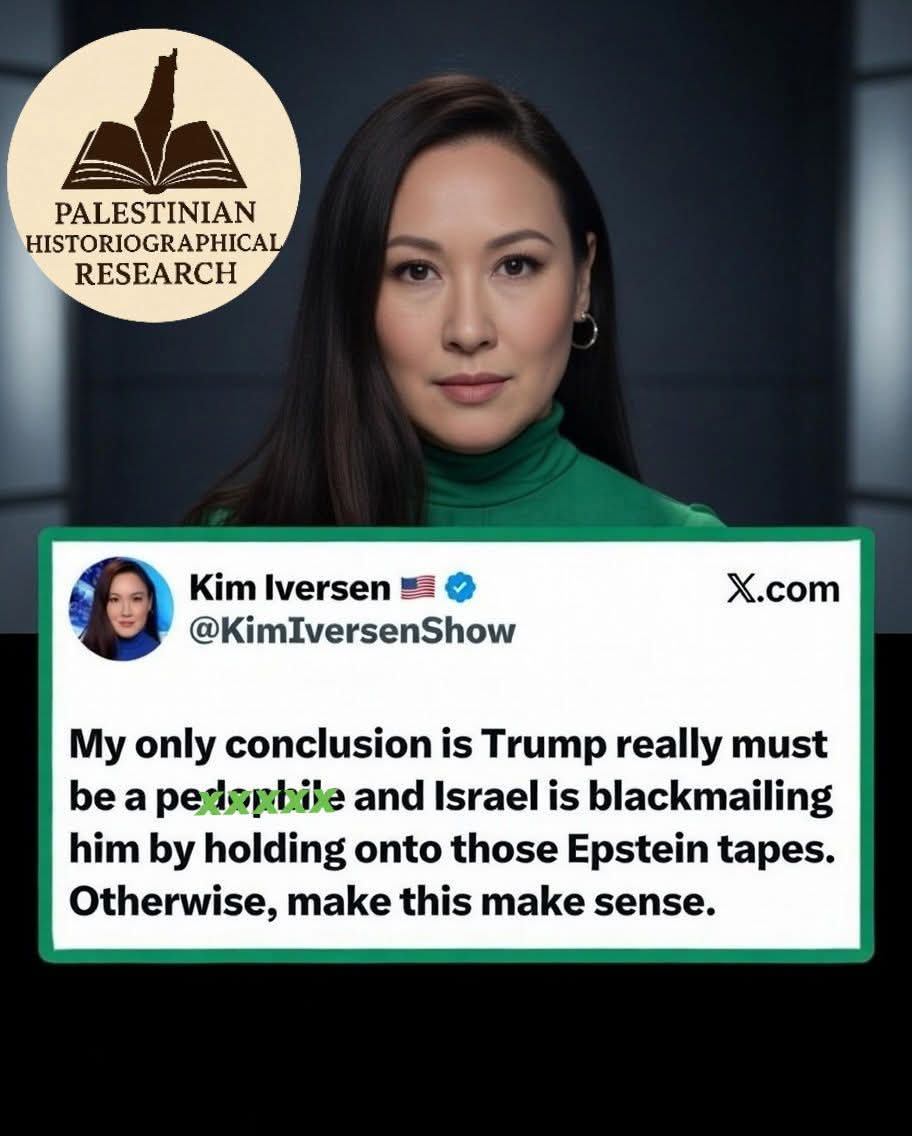
On February 28, 2026, as joint U.S.-Israel military operations escalated against Iranian targets, independent journalist Kim Iversen posted on X:
“My only conclusion is Trump really must be a pedophile and Israel is blackmailing him by holding onto those Epstein tapes. Otherwise, make this make sense.”
This statement gained rapid traction amid the ongoing release of Epstein-related documents under the Epstein Files Transparency Act (signed by President Trump on November 19, 2025), which mandated disclosure of unclassified records held by the Department of Justice (DOJ, 2026). By late January 2026, over 3.5 million pages—including videos and images—had been published, yet independent reporting highlighted extensive redactions, withheld sections (particularly those referencing allegations involving Trump), and compliance issues (NPR, 2026a; NPR, 2026b).
Structural Opacity in Declassification
Scholarly work on government secrecy underscores that declassifications are seldom neutral or exhaustive. Connelly (2023) demonstrates through large-scale analysis how selective release and redaction serve political ends, distorting historical narratives. Dudding (2021) terms this selective declassification, creating an uneven informational landscape. In the Epstein case, NPR investigations revealed dozens of pages withheld or removed from public view, including FBI interview summaries tied to historical allegations against public figures (NPR, 2026b).
Tréguer (2023) frames such opacity as structural, safeguarding intelligence autonomy from oversight. Across administrations—including Trump’s—promises of full transparency (e.g., JFK files, UFOs, now Epstein) have yielded partial outputs marked by delays, redactions, and bipartisan criticism.
Kompromat as Analytical Framework
Iversen’s hypothesis invokes kompromat—compromising material used for leverage. Oates (2017) analyzes its role in fostering cynicism and influencing policy, originally in post-Soviet contexts but extensible to transnational networks. Released Epstein files include references to connections with Israeli figures and speculative intelligence ties, though these remain unverified, second-hand, and lacking public corroboration.
Methodological Considerations and Alternatives
Historiographically, the claim presents challenges: it infers direct causation from correlation (policy alignment + document timing) without primary evidence of specific tapes or active blackmail. More parsimonious explanations include established lobbying dynamics (Mearsheimer & Walt, 2007), strategic geopolitical interests against Iran, or domestic political pressures.
Yet outright dismissal based solely on “lack of public evidence” overlooks archive realities: sensitive intelligence material is routinely exempted (Connelly, 2023). Absence in released files does not prove non-existence, especially amid documented withholding.
Implications for Real-Time Historiography
This case exemplifies how digital virality fills institutional voids. Heft and Buehling (2022) describe conspiracy diffusion in hybrid information ecologies, where incomplete disclosures breed plausible speculation. Historians must highlight archival silences (Trouillot, 1995) without normalizing opacity or endorsing unverified leaps.
Conclusion
Iversen’s intervention underscores tensions between elite foreign policy, power networks, and transparency promises. Without independent, comprehensive declassification oversight, such hypotheses will persist as rational responses to incomplete records. Critical historiography demands scrutiny of both viral claims and the systemic silences enabling them.
References
- Connelly, M. (2023). The declassification engine: What history reveals about America’s top secrets. Pantheon Books.
- Dudding, S. (2021). Spinning secrets: The dangers of selective declassification. Yale Law Journal, 130(3), 708–761. [View full article at Yale Law Journal]
- Heft, A., & Buehling, K. (2022). Measuring the diffusion of conspiracy theories in digital information ecologies. Convergence, 28(5), 1245–1265. [Access full article via DOI]
- Iversen, K. [@KimIversenShow]. (2026, February 28). My only conclusion is Trump really must be a pedophile and Israel is blackmailing him by holding onto those Epstein tapes… [X post]. X. [View original post on X]
- Mearsheimer, J. J., & Walt, S. M. (2007). The Israel lobby and U.S. foreign policy. Farrar, Straus and Giroux.
- NPR. (2026a, February 24). Justice Department withheld and removed some Epstein files related to Trump. [Read NPR report]
- NPR. (2026b, March 5). Justice Department publishes some missing Epstein files related to Trump. [Read NPR update]
- Oates, S. (2017). Kompromat goes global?: Assessing a Russian media tool in the United States. Slavic Review, 76(S1), S57–S65. [Access article at Slavic Review]
- Tréguer, F. (2023). From radical contention to deference: A sociogenesis of intelligence oversight in the United States (1967–1981). HAL Sciences Po. [View at HAL Sciences Po]
- Trouillot, M.-R. (1995). Silencing the past: Power and the production of history. Beacon Press.
- U.S. Department of Justice. (2026, January 30). Department of Justice publishes 3.5 million responsive pages in compliance with the Epstein Files Transparency Act [Press release]. [Official DOJ press release]