There is a widely held idea—even in informed circles—that the territory where Israel is today “was called the British Mandate of Palestine.” While this may seem like an accurate description, it is conceptually incorrect because it confuses the name of the territory with the legal regime under which it was administered.
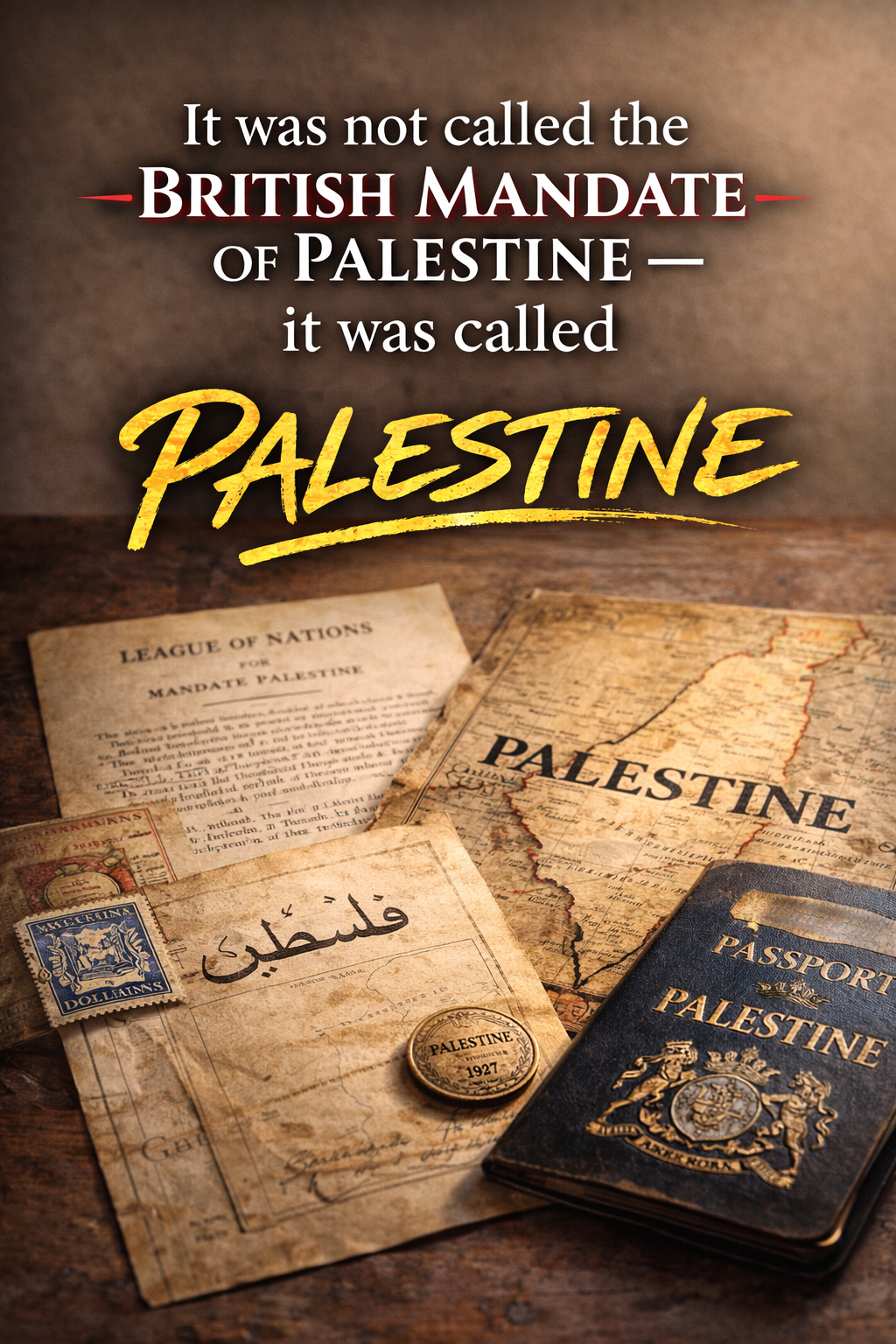
The territory was called Palestine. The so-called “British Mandate” was not a proper name but an administrative category established after the First World War by the League of Nations. In 1922, this body approved the Mandate for Palestine, granting the United Kingdom administrative authority over the territory. The document itself is clear: the mandate was for Palestine, not a renaming of the territory (League of Nations, 1922).
This becomes even clearer when looking at the prior context. At the time of the Balfour Declaration, the territory was already internationally recognized as Palestine, with a long history dating back through Egyptian, Assyrian, Hellenistic, Roman, Byzantine, and later Arabized periods under the name Filastin.
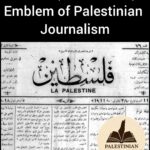
During the mandate period (1920–1948), all official British documentation—including laws, passports, postage stamps, coins, and correspondence—consistently used the name “Palestine” (in English, Arabic, and Hebrew) as the primary designation of the territory (Segev, 2000). Historiography agrees that terms like “Mandatory Palestine” or “British Mandate of Palestine” are later analytical labels, not official names in use at the time (Gelvin, 2014; Khalidi, 1997).
Occasionally, a counterargument is raised citing the appearance of the Hebrew term “Eretz Israel” (abbreviated א״י or “E.I.”) in some mandate-era elements, such as coins and stamps. However, this was a specific, politically motivated addition—granted as a concession to the Jewish population—and it did not replace or alter the official name of the territory, which remained “Palestine” in the three official languages (Krämer, 2008).
Confusing these levels—the geographical and historical name of the territory, occasional symbolic additions, and the legal regime of the mandate—distorts historical understanding. Saying the territory “was called the British Mandate of Palestine” or that “it was really called Eretz Israel” projects later or partial categories onto a different reality.
In precise terms:
– Name of the territory (official and everyday): Palestine
– Political status (1920–1948): territory under British mandate (Mandate for Palestine)
– Additions like “Eretz Israel” (א״י): secondary symbolic elements in Hebrew, not official names of the territory
Words matter. Distinguishing between the actual name of the territory and later labels or additions is not a minor detail but a basic requirement for understanding history correctly.
References
Gelvin, J. L. (2014). The Israel-Palestine conflict: One hundred years of war (3rd ed.). Cambridge University Press.
Khalidi, R. (1997). Palestinian identity: The construction of modern national consciousness. Columbia University Press.
Krämer, G. (2008). A history of Palestine: From the Ottoman conquest to the founding of the State of Israel. Princeton University Press.
League of Nations. (1922). Mandate for Palestine.
Segev, T. (2000). One Palestine, complete: Jews and Arabs under the British Mandate. Metropolitan Books.