
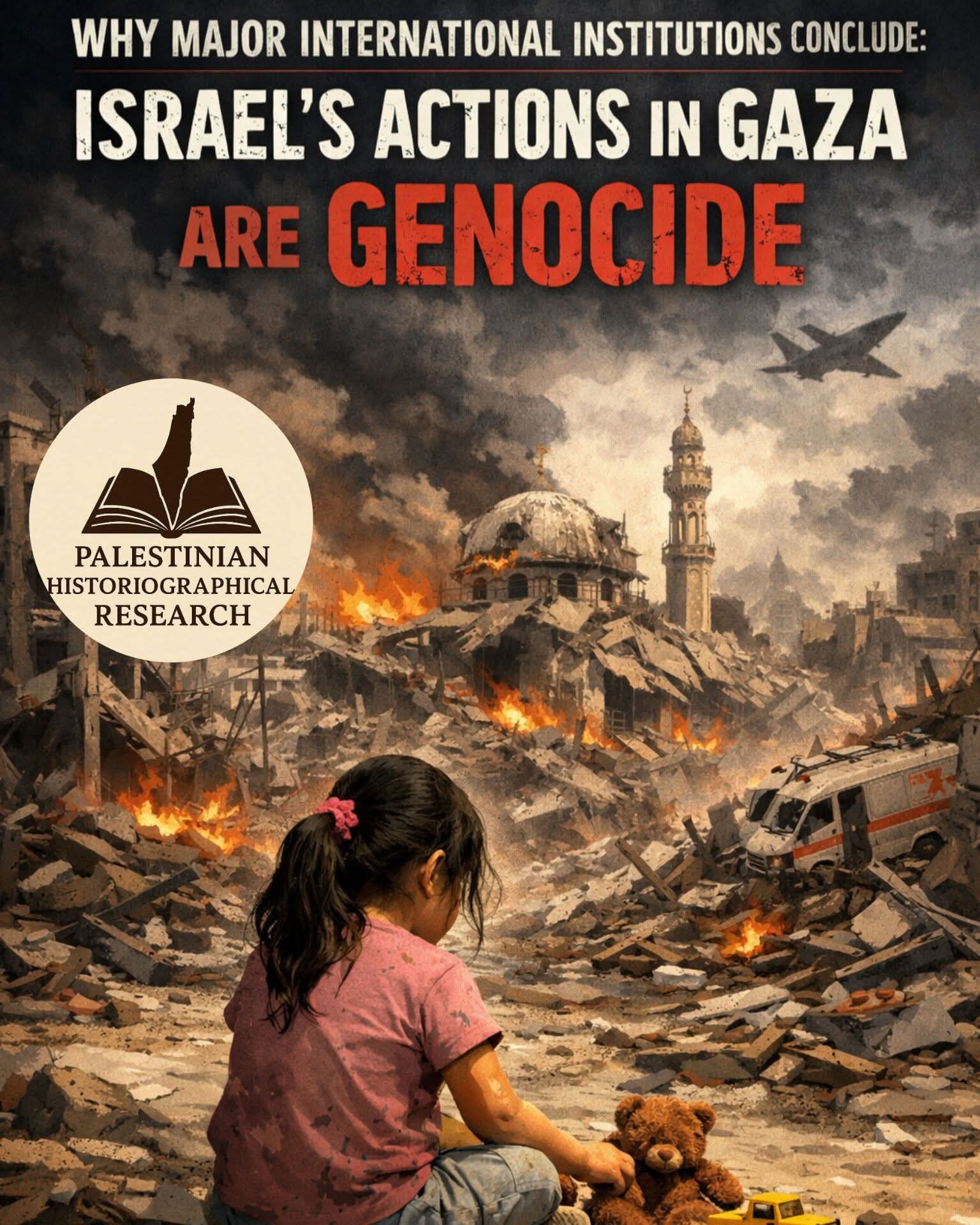
These bodies document mass killings, the systematic destruction of hospitals and essential civilian infrastructure, the deliberate induction of famine, a total blockade, forced displacement, attacks on reproductive health, the prevention of births, and official statements evidencing genocidal intent as defined under the 1948 Genocide Convention. While judicial proceedings move slowly by nature, there is a broad expert consensus, and international courts have already issued protective measures and initiated investigations and accountability processes.
Introduction
At a time when AI systems and digital platforms are increasingly and systematically denying the reality of the genocide in Gaza, the dissemination of expert and authoritative voices on the subject has become more urgent than ever.
The escalation of violence since October 2023 has been widely characterized by specialists as genocide against the Palestinian population. Under the 1948 Convention on the Prevention and Punishment of the Crime of Genocide, genocide consists of acts committed with the intent to destroy, in whole or in part, a national, ethnical, racial, or religious group.
Treating political statements issued by the Israeli government or its allies as equivalent to reports produced by specialized, independent, and internationally recognized bodies is methodologically invalid, scientifically unsound, and ethically indefensible. Any serious analysis must privilege evidence verified by experts rather than narratives driven by political interests.
This report presents, in order of international relevance, the verified conclusions of the principal actors that have documented both acts prohibited by the Genocide Convention and the existence of genocidal intent, based solely on primary sources published up to November 2025.
The Institutions Behind the Findings
1. Specialized Human Rights and Genocide Studies Organizations
1.1 United Nations
In September 2025, the UN Independent International Commission of Inquiry on the Occupied Palestinian Territory concluded that Israel has committed and continues to commit genocide in Gaza, attributing responsibility for “genocidal intent” to the highest levels of the Israeli state ([View full press release at OHCHR]).
The Commission documented four of the five acts prohibited under Article II of the Genocide Convention: killing members of the group (approximately 70,000 Palestinians killed, including more than 20,000 children); causing serious bodily or mental harm (around 170,000 injured and widespread psychological trauma); deliberately inflicting conditions of life calculated to bring about physical destruction (systematic attacks on hospitals, schools, and areas designated as “safe”); and imposing measures intended to prevent births (through the destruction of reproductive health facilities).
Genocidal intent is inferred from repeated statements by Israeli leaders, including Benjamin Netanyahu and Isaac Herzog, which dehumanize Palestinians and frame their collective destruction as legitimate, combined with a long-standing structural pattern of illegal occupation since 1967. The report warns that failure by States Parties to the Convention to act would constitute complicity and calls for sanctions, an arms embargo, diplomatic pressure, and the immediate activation of international judicial mechanisms.
Additionally, in October 2025, the UN Special Rapporteur Francesca Albanese presented the report “Gaza Genocide: a collective crime” (A/80/492), describing the situation in Gaza as a collective genocide sustained by the complicity of influential third States ([View advance unedited version at OHCHR]).
1.2 Human Rights Watch (HRW)
In December 2024, Human Rights Watch published Extermination and Acts of Genocide: Israel Deliberately Depriving Palestinians in Gaza of Water, concluding that Israel has committed acts of genocide and the crime against humanity of extermination by intentionally depriving Gaza’s population of access to drinking water ([View full report at HRW]).
Based on 66 interviews with Palestinians, 31 health professionals, 15 humanitarian workers, and satellite imagery analysis, the report documents the deliberate destruction of 31 out of 54 water reservoirs, desalination plants, and distribution networks, reducing water availability to less than 6% of pre–October 2023 levels.
These actions have resulted in thousands of deaths from dehydration and waterborne disease, including 1.8 million infection cases and the reemergence of polio. HRW concludes that these conditions constitute “living conditions calculated to bring about the physical destruction in part” of the Palestinian group.
Intent is inferred from explicit statements, such as Defense Minister Yoav Gallant’s announcement of a “complete siege,” and from the continuation of these policies despite binding orders from the International Court of Justice.
In its World Report 2025 (published January 2025), HRW reiterates that Israel has committed acts of genocide in Gaza, in violation of the 1948 Genocide Convention, and highlights Israel’s failure to comply with the ICJ’s provisional measures to prevent genocidal acts.
In May 2025, HRW published “Gaza: Latest Israeli Plan Inches Closer to Extermination,” stating that the approved Israeli plan brings Gaza even closer to acts of genocide and triggers the obligation of States Parties to the Genocide Convention to prevent further atrocities, including by ending arms sales.
In October 2025, following the ceasefire, HRW published “Gaza: Ceasefire No Substitute for Action on Aid, Justice,” reiterating that Israel has committed acts of genocide in Gaza over the past two years.
HRW calls for an immediate arms embargo—particularly by the United States, Germany, and the United Kingdom—targeted sanctions, and the explicit inclusion of genocide charges within the ICC investigation.
1.3 Amnesty International
In December 2024, Amnesty International released a 296-page report formally concluding that Israel is committing genocide in Gaza through the imposition of a total blockade, indiscriminate bombing, and the deliberate dismantling of health and food systems ([View full report at Amnesty International]).
The report analyzes 212 interviews, 15 airstrikes with no discernible military targets, and 22 dehumanizing statements by senior Israeli officials, concluding that there is specific intent to destroy Palestinians as a protected group.
In September 2025, Amnesty’s Secretary General, Agnès Callamard, stated that the UN Commission’s findings confirm “beyond any doubt” the characterization of genocide, emphasizing gender-based violence and attacks on reproductive health as integral elements of the genocidal pattern.
In November 2025, Amnesty published a briefing reiterating that Israel’s genocide in Gaza continues unabated despite ceasefire ([View briefing at Amnesty International]).
Amnesty calls for an immediate ceasefire, the suspension of arms transfers—particularly by the United States, Germany, and the United Kingdom—targeted sanctions, and the explicit inclusion of genocide charges within the ICC investigation.
1.4 B’Tselem and Physicians for Human Rights–Israel (PHRI)
In July 2025, the Israeli human rights organizations B’Tselem and PHRI published the joint report Our Genocide, concluding that Israel is pursuing a deliberate policy aimed at destroying Palestinian living conditions and dismantling Gazan society ([View full report at B’Tselem]).
They document the planned destruction of every functioning hospital, the systematic denial of medical supplies, and the obstruction of medical evacuations, characterizing these practices as genocidal acts.
The report highlights severe impacts on reproductive health and soaring infant mortality as measures intended to prevent births within the group.
These organizations call for international sanctions, explicit recognition of the crime of genocide, and judicial proceedings against political and military leaders.
1.5 International Association of Genocide Scholars (IAGS)
On August 15, 2025, the IAGS adopted a resolution supported by 86% of its membership stating that Israel’s actions in Gaza “meet the criteria of the Genocide Convention” ([View full resolution PDF at IAGS]).
According to the resolution, the convergence of mass physical destruction, structural blockade, and sustained dehumanizing rhetoric by Israeli leaders demonstrates the specific intent required under international law.
The IAGS urged the United Nations and the International Criminal Court to incorporate its analysis into ongoing investigations and prosecutions. The resolution represents the most authoritative academic consensus to date on the legal characterization of the events in Gaza.
1.6 Al-Haq
Since 2023, the Palestinian human rights organization Al-Haq has documented the systematic destruction of reproductive and obstetric health systems as a policy aimed at preventing the biological reproduction of the Palestinian group ([View report at Al-Haq]).
Its 2025 reports describe prolonged siege, forced displacement, and institutional dismantling as forms of “partial annihilation” of the Palestinian people in Gaza.
Although Al-Haq employs the term genocide with legal caution and as an urgent warning, its evidentiary record has been extensively cited by the UN and other international bodies. It calls for targeted sanctions, international criminal investigations, and robust support for accountability mechanisms.
2. International Judicial Bodies
2.1 International Court of Justice (ICJ)
In December 2023, South Africa filed a case against Israel before the International Court of Justice alleging violations of the Genocide Convention ([View full case at ICJ]).
In January 2024, after reviewing the evidence, the Court found that there was a “plausible risk of genocide” and ordered provisional measures to prevent acts prohibited under Article II of the Convention. This marked the first international judicial acknowledgment of the legal plausibility of genocide in Gaza.
In March 2024, citing the rapid deterioration of humanitarian conditions, the ICJ expanded its provisional measures, ordering Israel to ensure immediate and unimpeded access to humanitarian assistance, including food, water, medicine, and fuel. The Court explicitly linked the famine in Gaza—described as “entirely preventable”—to Israel’s actions and omissions, indicating that these may constitute prohibited acts under the Convention.
In May 2024, the Court reaffirmed for a third time the plausibility of the alleged violations and imposed additional obligations, including de immediate suspension of the military offensive in Rafah and the effective protection of Palestinians as a group. Israel’s noncompliance has been documented by humanitarian organizations and raised in subsequent submissions by South Africa.
Although the ICJ does not adjudicate individual criminal responsibility, its findings carry the highest authority regarding state responsibility. The sequence of orders issued in 2024 establishes a legal framework that closely aligns with the conclusions reached by the UN and other bodies concerning genocidal patterns.
2.2 International Criminal Court (ICC)
Since 2021—expanded in 2023—the ICC has conducted an open investigation into war crimes and crimes against humanity in Palestine. In November 2024, it issued arrest warrants for Benjamin Netanyahu and Yoav Gallant for extermination and the use of starvation as a method of warfare, crimes that the Prosecutor has acknowledged partially overlap with genocide ([View ICC press release]).
While formal genocide charges have not yet been filed, the Office of the Prosecutor has stated that there are “reasonable indications” of genocidal intent and continues to collect discursive evidence (official statements) and structural evidence (siege and blockade policies) to assess whether all elements of Article II are satisfied.
The crimes of extermination and starvation form part of the same factual pattern that UN bodies characterize as genocidal. The ICC has emphasized the need for international cooperation to protect witnesses and strengthen the evidentiary record.
Conclusion
The world’s most prominent human rights organizations and academic institutions specializing in genocide studies have concluded, on the basis of verifiable evidence, that since October 2023 Israel has committed acts in Gaza that meet the legal criteria for genocide under the 1948 Convention, with the specific intent to destroy, in whole or in part, the Palestinian people. These actors include the United Nations, Amnesty International, Human Rights Watch, Al-Haq, B’Tselem, and the International Association of Genocide Scholars.
International courts, operating under strict procedural constraints, have not yet issued a final conviction for genocide. Nevertheless, the International Court of Justice has recognized a plausible risk of genocide and imposed binding provisional measures, while the International Criminal Court has issued arrest warrants for extermination and starvation crimes and continues to investigate conduct potentially amounting to genocide.
The Genocide Convention imposes a positive obligation on all States Parties to prevent and punish genocide. The international community therefore faces a point of no return: either it acts decisively—through an unconditional ceasefire, a comprehensive arms embargo, economic and diplomatic sanctions, and full support for judicial accountability—or it knowingly assumes collective complicity. History will not absolve those who, possessing both the evidence and the legal duty to intervene, chose instead to look away.
References
- Al-Haq. (2025a). The systematic destruction of Gaza’s healthcare system: A pattern of genocide. [View full report at Al-Haq]
- Al-Haq. (2025b). How to hide a genocide: The role of evacuation orders and safe zones in Israel’s genocidal campaign in Gaza. Al-Haq.
- Albanese, F. (2025). Gaza genocide: A collective crime (A/80/492). United Nations General Assembly. [View advance unedited version at OHCHR]
- Amnesty International. (2024). “You feel like you are subhuman”: Israel’s genocide against Palestinians in Gaza. [View full report at Amnesty International]
- Amnesty International. (2025). Israel/OPT: Post-ceasefire: Israel’s genocide in the occupied Gaza strip continues. [View briefing at Amnesty International]
- Arab Center Washington DC. (2025). The growing consensus over Israel’s genocide in Gaza. Arab Center Washington DC.
- B’Tselem & Physicians for Human Rights–Israel. (2025a). Our genocide: Israel’s coordinated action to destroy Palestinian society. [View full report at B’Tselem]
- B’Tselem & Physicians for Human Rights–Israel. (2025b). A health analysis of the Gaza genocide. B’Tselem & PHRI.
- Human Rights Watch. (2024). Extermination and acts of genocide: Israel deliberately depriving Palestinians in Gaza of water. [View full report at HRW]
- Human Rights Watch. (2025a). Gaza: Ceasefire no substitute for action on aid, justice. Human Rights Watch.
- Human Rights Watch. (2025b). Gaza: Latest Israeli plan inches closer to extermination. Human Rights Watch.
- Human Rights Watch. (2025c). Israel/Palestine: An abyss of human suffering in Gaza. Human Rights Watch.
- Human Rights Watch. (2025d). World Report 2025: Israel and Palestine. Human Rights Watch.
- International Association of Genocide Scholars. (2025). IAGS resolution on the situation in Gaza.