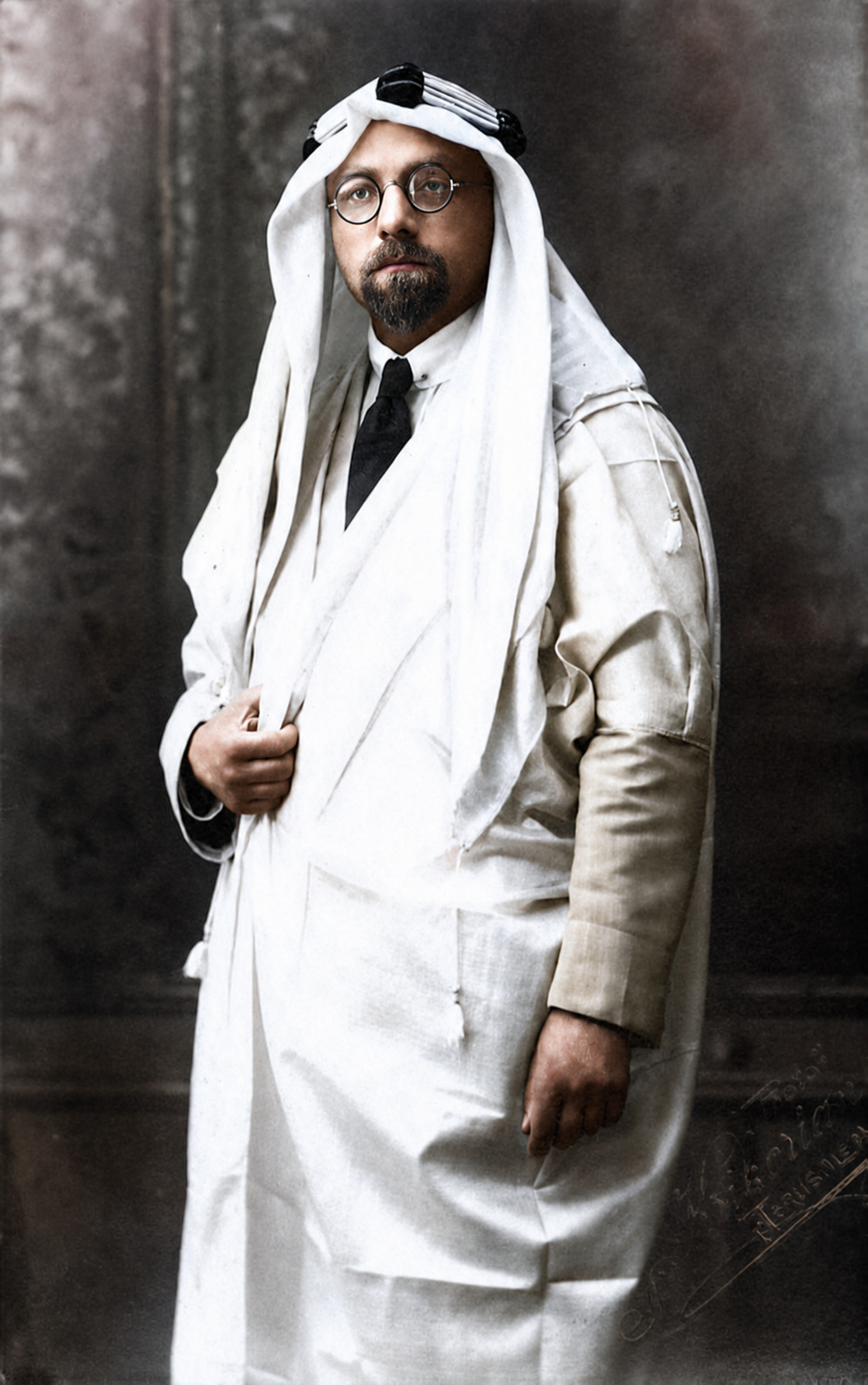
On June 30, 1924, in Jerusalem, the Dutch lawyer, poet, and journalist Jacob Israël de Haan was shot dead by a member of the Zionist paramilitary group Haganah. Historians widely regard this as the first political assassination during the British Mandate period in Palestine, a pivotal moment in intra-Jewish violence and the use of targeted killings to silence dissent (Segev, 2000; Morris, 2008).
Almost five decades after the crime, in 1970, the perpetrator himself, Avraham Tehomi —then an elderly retired businessman in Hong Kong, with no political position and nothing to lose or gain institutionally in Israel— confessed on camera to the murder and identified Yitzhak Ben-Zvi, his superior in the Haganah and by then deceased for more than twenty years after having served as President of the State of Israel, as the ultimate person responsible. That declaration, given without coercion, without apparent benefit, and consistently for the rest of his life, is the central piece for understanding not only who ordered the crime, but what kind of organization the Haganah was in its early years.
From Enthusiastic Zionist to Uncomfortable Dissident
De Haan had arrived in Palestine in 1919, initially drawn by Zionist ideals. A lawyer, poet, and journalist of note in the Netherlands —author of one of the first Dutch novels to address an openly homosexual relationship— he came to Jerusalem seeking, in his own words, to “rebuild the land, the people, and the language.” But his initial enthusiasm quickly turned into disillusionment.
Having returned to Jewish orthodoxy, De Haan integrated as a lawyer and political spokesman for the Haredi community, representing Agudat Israel before the Mandate authorities. From that position, he became an increasingly sharp critic of the mainstream Zionist leadership. He advocated peaceful coexistence between Jews and Arabs and firmly rejected the idea of a Jewish state built on the displacement and marginalization of the indigenous Palestinian population. Instead, he sought alternative political arrangements based on equality and mutual respect, establishing direct contacts with Arab leaders —including Emir Hussein bin Ali and his son Abdullah— to counter what he saw as Zionist expansion that fueled ethnic tensions and conflict (Witt, 2021; Khalidi, 2020).
This activism did not go unnoticed. From 1922 onward, De Haan endured sustained harassment, including death threats, and became the target of open hostility from Zionist sectors that viewed him as a traitor. His plan to travel to London in July 1924, together with an anti-Zionist Haredi delegation, to expose the practices of the Zionist leadership in Palestine before British officials —possibly including Winston Churchill— sealed his fate as a target.
The Assassination: The Facts
The assassination was carried out by Avraham Tehomi, an operative of the Haganah, the armed wing of the organized Zionist movement in Palestine. On the night of June 30, 1924, De Haan left the synagogue adjacent to Shaare Zedek Hospital on Jaffa Road in Jerusalem after evening prayers. A man approached him and asked the time; as De Haan reached for his pocket watch, the man shot him three times at point-blank range and fled. De Haan died minutes later. The assassin was never arrested, despite the British authorities offering a reward for information.
Initially, the Yishuv —the Jewish community in Palestine— accepted without much question the version that the crime had been the work of Arabs, possibly linked to rumors about De Haan’s private life. That version, now widely understood as a maneuver to divert suspicion, took decades to unravel.
Who Gave the Order? Two Testimonies, Two Very Different Incentive Structures
That the Haganah carried out the assassination as an organization —and not an isolated individual acting on his own— is not in dispute among historians. What has generated, and continues to generate, historiographical debate is the exact identity of who gave the final order. But it must be stated clearly: the two available testimonies on this question do not carry the same evidentiary weight, and treating them as equivalent would be an error in source criticism.
The Hecht version (1952). That year, Yosef Hecht, the Haganah commander in Jerusalem at the time of the crime, told the organization’s official historian that the decision had been his, made together with the local commander Zechariah Urieli, without consulting higher authorities. This version must be read in its exact context: 1952 was the same year in which Yitzhak Ben-Zvi —later identified as the ultimate person responsible— assumed the presidency of the State of Israel. A subordinate who, at that precise moment, attributes exclusive responsibility for an assassination to himself in order to keep the name of the person about to become head of state clean fits the most predictable and lowest-personal-cost pattern of institutional cover-up imaginable: there was no penal risk (no one was going to prosecute a 1924 political crime in 1952), and there was a clear benefit for the organization and for Hecht himself, who was portrayed as a disciplined and autonomous commander rather than as an executor of political orders from above.
The Tehomi version (1970). More than three decades later, when journalists Shlomo Nakdimon and Shaul Mayzlish located Tehomi in Hong Kong, he openly confessed on Israeli television: “I did what the Haganah decided had to be done. And nothing was done without the order of Yitzhak Ben-Zvi… I have no regrets, because he [De Haan] wanted to destroy our entire idea of Zionism.” By then, Ben-Zvi had been dead for more than twenty years. There was no longer any institutional benefit in protecting him or any legal consequence in incriminating him. Tehomi, moreover, incriminated himself as the person who pulled the trigger —something he had no obligation to admit— and maintained that same version consistently in subsequent interviews for the rest of his life, without altering or retracting it.
Applying the basic criterion of all historical source criticism —who is speaking, at what moment, to whom, and what they stand to gain or lose by saying what they say— the scales are not balanced. Hecht’s testimony was given in the context with the greatest imaginable incentive for cover-up; Tehomi’s was given in the context with the least imaginable incentive to lie in this case. This does not automatically turn Tehomi’s version into a fact proven beyond all doubt, but it does mean that it deserves substantially greater evidentiary weight than Hecht’s version, and that presenting both as equally uncertain —as if they were symmetrical— would in itself be a distortion of historical method.
Added to this is a fact that reinforces Tehomi’s version rather than weakening it: historians who have examined the Haganah’s internal archive agree that the decision to assassinate De Haan followed “a formal and organized process” within the organization’s chain of command (Giebels, 2014). Far from diluting responsibility, this fact makes it more plausible —not less— that the final order came from the political hierarchy above rather than from an isolated decision by a local commander acting on his own. Hierarchical and disciplined paramilitary organizations, which is precisely how the Haganah of those years is described, do not usually delegate decisions of this magnitude —the assassination of a public figure with international repercussions— to the autonomous judgment of an intermediate commander without going through higher levels. The “collective decision” does not exonerate anyone at the top: if anything, it confirms that there was a chain of command above Hecht, and that Tehomi’s explanation —an order coming from Ben-Zvi— fits better with the actual functioning of that type of structure than the explanation of a local commander acting alone.
A Precedent That Was Repeated
Regardless of the nuances regarding the exact chain of command, the assassination of De Haan established a precedent that transcended the individual case: the willingness of a hierarchical and disciplined Zionist paramilitary organization to employ lethal violence against an internal critic, a Jew, unarmed, whose only “threat” was political and diplomatic. This was not an isolated incident without historical continuity. Just a few years later, in 1931, Tehomi himself would lead the split that gave rise to the Irgun, an organization that would take political violence —against Arabs, against the British, and, in specific episodes, against other Jews considered “traitors”— to a much larger scale during the Arab Revolt of 1936–1939. The Lehi, for its part, would assassinate British Minister Lord Moyne in Cairo in 1944.
In that sense, the assassination of De Haan is the first documented link in a chain of political violence directed both inward and outward from the organized Zionist movement, long before the creation of the State of Israel (Sprinzak, 1999; Segev, 2000).
Reactions and Legacy
The crime provoked immediate outrage in Palestine and in Europe. Orthodox and non-Zionist Jewish communities condemned it as a direct attack on freedom of expression and as a dangerous slide toward extremism. In New York, ultra-Orthodox Jews distributed Yiddish pamphlets condemning the “Torah-less Zionists who use violence to enslave the pious.” The labor newspaper Do’ar Ha-Yom itself published an uneasy reflection on the episode, warning that “the flag of our movement must not be stained with the blood of the innocent or the guilty.”
In the following decades, the case fueled an extensive academic debate on the limits and contradictions of the Zionist project. Historians such as Ilan Pappé and Benny Morris —although they come from different historiographical schools and do not always agree in their general conclusions— have pointed to the episode as evidence that Zionist political violence was not limited to Arab-Jewish confrontations but also included internal suppression mechanisms. This broader interpretive reading —which sees in the De Haan case the early expression of a structural strategy, and not merely an isolated episode— has solid documentary backing in its essentials (the organization, the planning, the political motivation), although the exact scope of that “strategy” —whether it was a deliberate policy of the Zionist leadership as a whole or the logic of a more belligerent sector within it— remains a subject of discussion among historians from different currents.
Conclusion
The available evidence permits us to state with solidity that De Haan was assassinated by a Haganah operative, in an act planned within an organized chain of command, with the objective of preventing him from exposing the policies of the Zionist leadership in London; that this episode marked the beginning of a practice of political violence that the organized Zionist movement repeated, with variations and increasing intensity, in the following decades; and that, from the contrast between the two available testimonies regarding the chain of command, Tehomi’s —given without any cover-up incentive, consistently, and in a self-incriminating manner— deserves substantially more credibility than Hecht’s, delivered at the moment of greatest possible political convenience to protect the person who that same year assumed the presidency of Israel. Recognizing that the case is not closed with absolute certainty does not equate to treating it as a tie between two equally plausible versions: the evidence, weighed with the rigor demanded by any historical reconstruction, clearly tilts the balance toward one of them.
References
- Giebels, L. (2014). Jacob Israel de Haan in Mandate Palestine: was the victim of the first Zionist political assassination a “Jewish Lawrence of Arabia”? Jewish Historical Studies, 46, 107–129. Available on JSTOR
- Khalidi, R. (2020). The Hundred Years’ War on Palestine: A History of Settler Colonialism and Resistance, 1917–2017. Columbia University Press.
- Kramer, M. (2024). Assassination in Zion. Martin Kramer on the Middle East. Full article available here
- Morris, B. (2008). 1948: A History of the First Arab-Israeli War. Yale University Press.
- Pappé, I. (2006). The Ethnic Cleansing of Palestine. Oneworld Publications.
- Segev, T. (2000). One Palestine, Complete: Jews and Arabs under the British Mandate. Metropolitan Books. Available on Internet Archive
- Sprinzak, E. (1999). Brother Against Brother: Violence and Extremism in Israeli Politics from Altalena to the Rabin Assassination. Free Press. Available on Internet Archive
- Witt, N. (2021). Jacob Israel de Haan: A queer and lapsed Zionist in Mandate Palestine. Jerusalem Quarterly, 87, 86–101. PDF available here